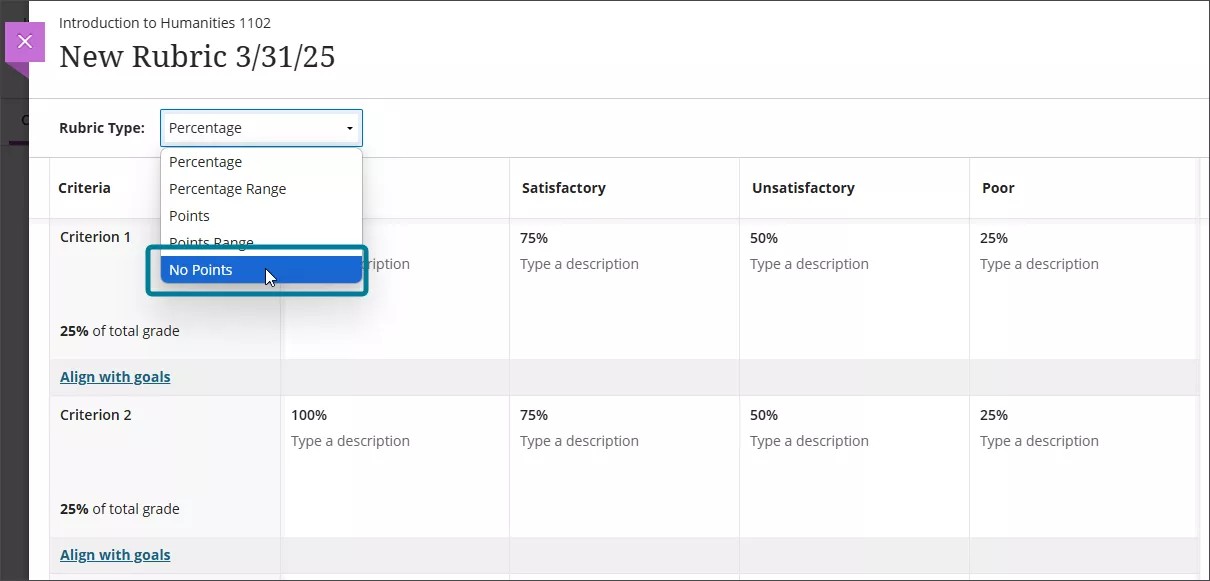
Dereceli Puanlama Anahtarı Türleri
Dereceli puanlama anahtarları satırlar ve sütunlar halinde düzenlenir:
Satırlar, birçok eğitmenin ödev çıktılarını veya puanlanan alanları olarak düşündüğü kriterleri temsil eder (örneğin, İçerik, Organizasyon veya Alıntılar).
Sütunlar, Mükemmel, Tatmin Edici veya İyileştirme Gerekiyor gibi performans seviyelerini temsil eder.
Puanların veya yüzdelerin nasıl hesaplanacağı, seçtiğiniz dereceli puanlama anahtarı türüne bağlıdır.
Dereceli puanlama anahtarı türleri
Bir kursta, dört tür dereceli puanlama anahtarı oluşturabilirsiniz:
Yüzdelik bazlı dereceli puanlama anahtarları
Yüzde aralığına dayalı dereceli puanlama anahtarları
Puan bazlı dereceli puanlama anahtarları
Puan aralığına dayalı dereceli puanlama anahtarları
Puansız dereceli puanlama anahtarları
Yüzdelik bazlı dereceli puanlama anahtarları
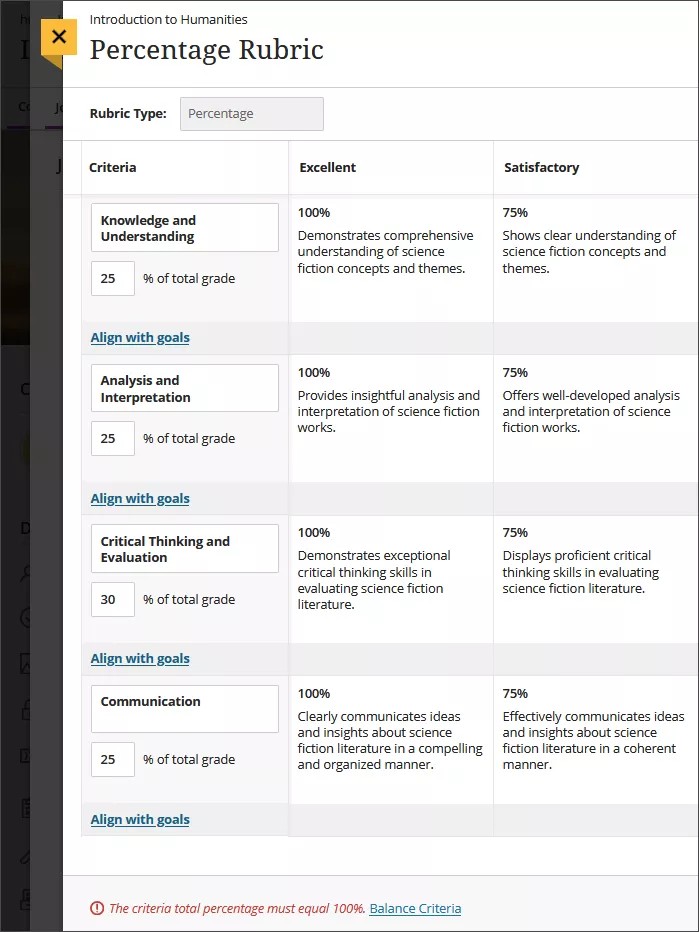
Yüzdeye dayalı dereceli puanlama anahtarlarında her bir kritere (satıra) yüzdelik bir ağırlık atanır. Tüm kriter ağırlıklarının toplamı %100 olmalıdır.
Performans seviyeleri (sütunlar), bir öğrencinin o kriterin ağırlığının ne kadarını kazanacağını tanımlar. Örneğin, %80 olarak ayarlanmış bir seviye kriterin ağırlığının %80'ini verir.
Her ölçüt için yüzde ağırlığını bağımsız olarak düzenleyebilir ve ayrıca her performans seviyesi için yüzde değerlerini düzenleyebilirsiniz. Bir performans seviyesi %100 olarak ayarlanmalıdır.
Kriter yüzdeleri %100'e eşit değilse bir uyarı mesajı görüntülenir. Yüzdeleri otomatik olarak ayarlamak veya manuel olarak güncellemek için Bakiye Ölçütü'nü seçebilirsiniz.
Yüzde aralığına dayalı dereceli puanlama anahtarları
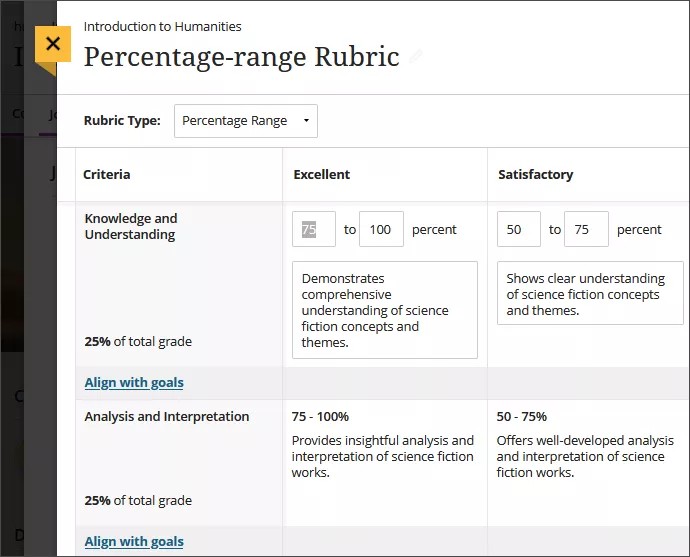
Yüzde aralıklı dereceli puanlama anahtarlarında, her performans düzeyi tek bir değer yerine bir yüzde aralığı kullanır.
Not verirken, bir performans seviyesi için tanımlanan aralık içinde bir yüzde seçersiniz. Sistem, nihai puanı ölçüt ağırlığına, seçilen yüzdeye ve not verilen öğe için mevcut toplam puana göre hesaplar.
Puan bazlı dereceli puanlama anahtarları
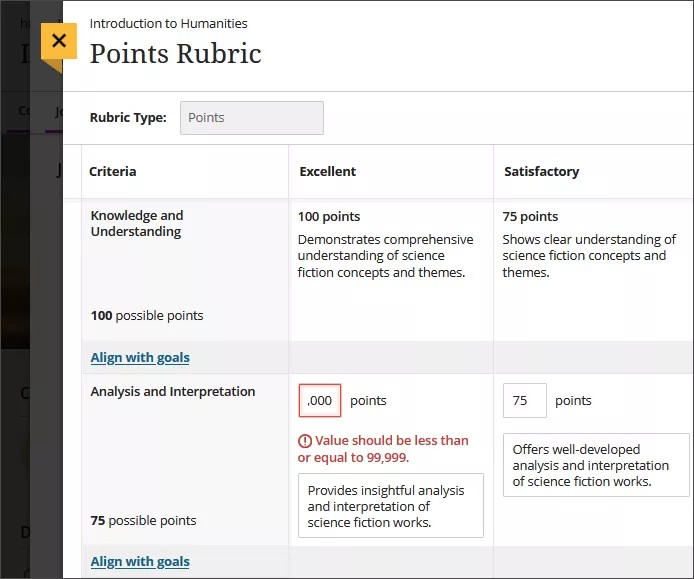
Puana dayalı dereceli puanlama anahtarlarında, puanlar performans düzeylerine (sütunlara) atanır. Bu puan değerleri, her bir kriter (satır) için mevcut maksimum puanları belirler.
Kriter toplamı, performans seviyelerindeki puanların toplamı olarak otomatik olarak hesaplanır. Bir düzeyin puan değerini düzenlerseniz, kriterin toplamı otomatik olarak güncellenir.
Yalnızca tamsayıları kullanabilirsiniz. Dereceli puanlama anahtarındaki toplam kullanılabilir puan 99,999'a eşit veya daha az olmalıdır.
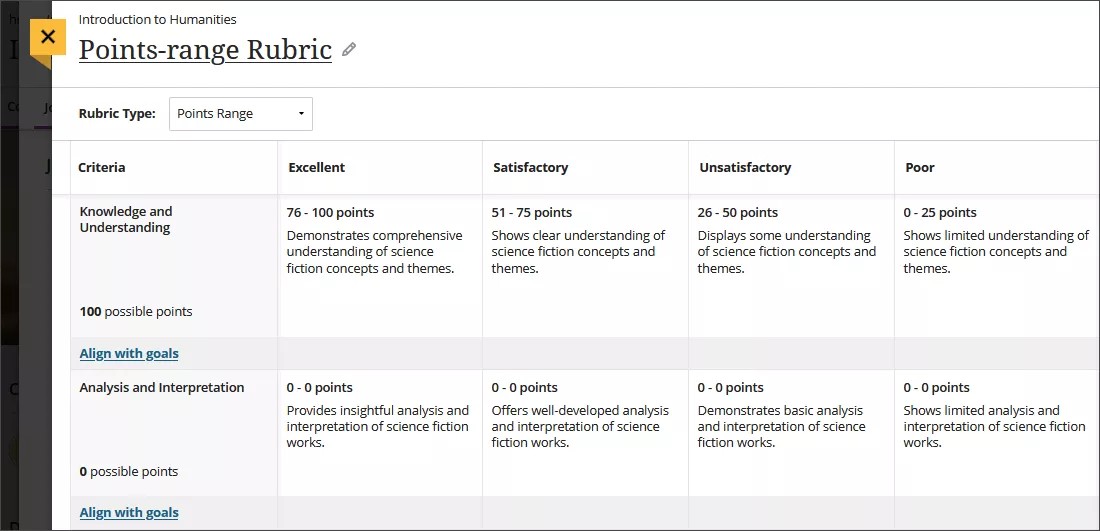
Puan aralığına dayalı dereceli puanlama anahtarları
Puan aralığı dereceli puanlama anahtarlarında, her performans seviyesi tek bir değer yerine bir puan aralığı kullanır.
Not verirken, tanımlanan aralık içinde bir puan değeri seçersiniz. Sistem, kriter puanını hesaplamak için bu değeri kullanır ve ardından tüm kriterlerdeki puanları toplar.
Dereceli puanlama anahtarındaki toplam kullanılabilir puan 99.999'a eşit veya daha az olmalı ve puan aralıkları düşük değerlerden yüksek değerlere doğru ilerlemelidir.
Puansız dereceli puanlama anahtarları
Puansız dereceli puanlama anahtarları, eğitmenlerin öğrenci çalışmalarını sayısal değerler yerine tanımlanmış kriterlere ve geri bildirimlere dayalı olarak niteliksel olarak değerlendirmelerine olanak tanır.
Bu dereceli puanlama anahtarı türü, sayısal bir puan vermeden açıklayıcı değerlendirme ve rehberliği vurgular.